
The Technate Map Is a Distraction
From Technate to Tech Oligarchy: What’s Actually Happening

Now and then, an old map resurfaces online. It shows North America unified into a single red landmass labeled The Technate of America, stretching from Greenland through Canada, the United States, Central America, and into parts of South America. The reactions are generally predictable. The reactions are often shock, suspicion, and a creeping sense that something long hidden is suddenly being revealed. With recent U.S. actions in Venezuela, renewed saber-rattling from the President about Greenland, and the growing influence of billionaire technologists in politics, the question naturally follows: Is this 1930s vision of technocratic rule quietly returning? Is it slowly becoming a reality? Is this the plan now?
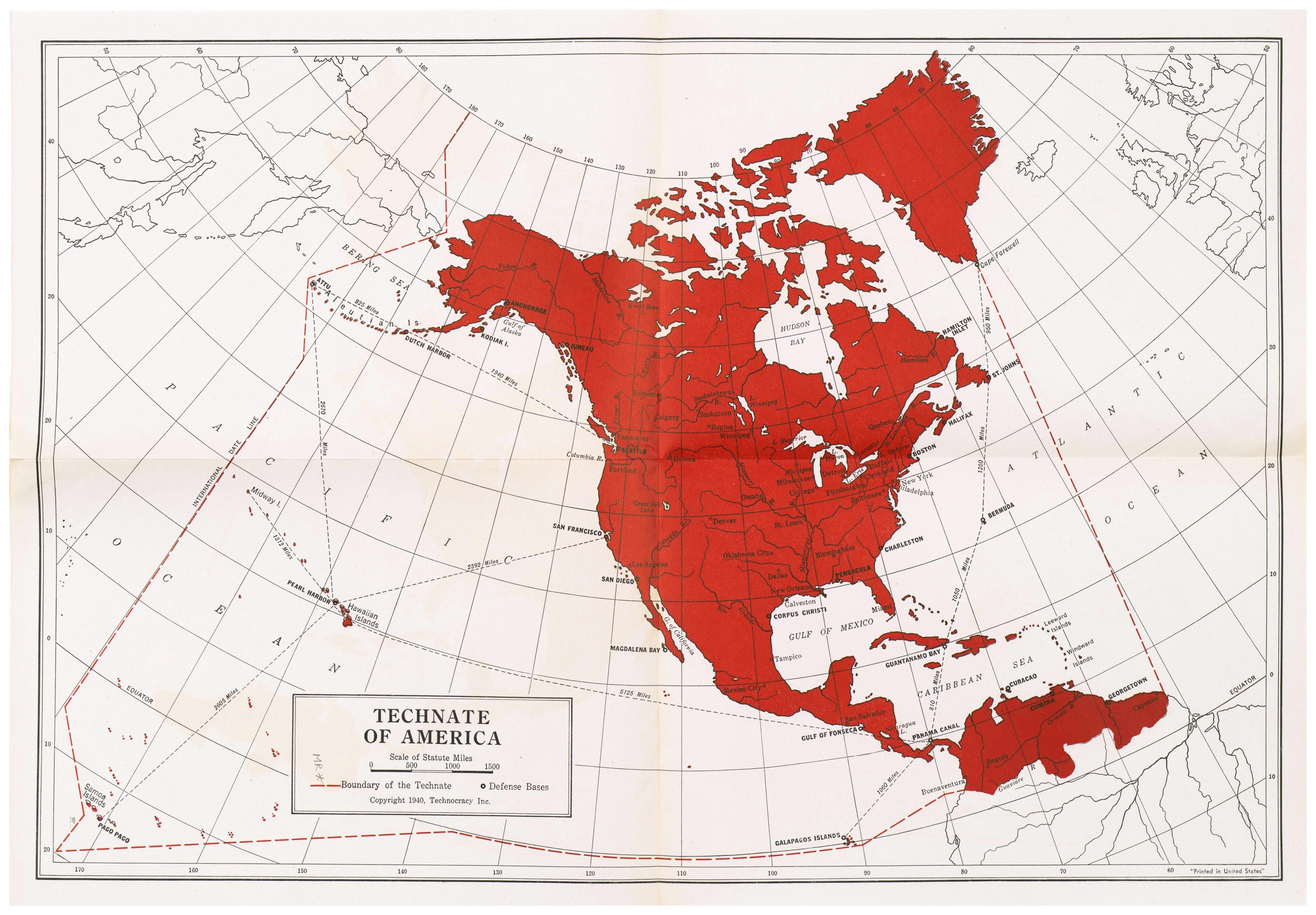
The short answer is most likely no. The longer answer is more interesting and more useful because it forces us to disentangle history, ideology, modern power, and the human tendency to see patterns after the fact. In other words, it helps us look at and pick apart a potential conspiracy theory before it becomes popular and widespread.
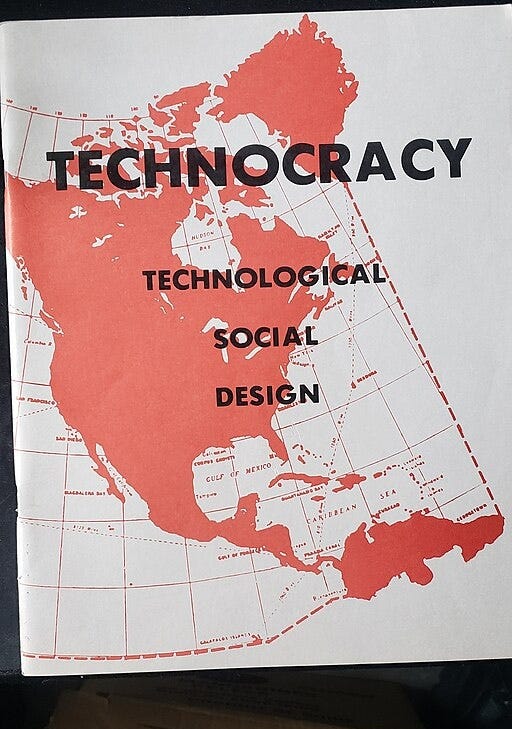
The technocracy movement was real. It emerged during the Great Depression, a moment when faith in capitalism and democratic governance was genuinely shaken. Engineers, scientists, and industrial planners examined mass unemployment alongside enormous productive capacity and concluded that the problem was not scarcity but mismanagement. Markets, they argued, were irrational. Politicians were incompetent. Democracy itself was too slow and emotional to manage an industrial society. Their solution was radical. They advocated replacing elected government and price-based economics with a system run by technical experts who would manage production and distribution scientifically, often using energy units rather than money.
The most visible organization promoting this idea was Technocracy Inc., founded in the early 1930s and led by figures like Howard Scott. The Technate map was never a military or imperial plan. It was a systems diagram. Technocrats believed North America constituted a single, self-contained industrial and energy system, and therefore should be governed as one. The borders were drawn according to resource flows, climate zones, and infrastructure rather than culture, law, or consent. That alone made the movement deeply unsettling to many Americans, even those frustrated with capitalism.
Technocracy ultimately failed for many reasons, but its greatest failure was its misunderstanding of people. It is assumed that efficiency would be enough to replace legitimacy and that expertise could substitute for consent. By the 1940s and 50s, the movement had largely collapsed, sidelined by the New Deal on one end and postwar prosperity on the other. What survived were fragments: systems engineering, operations research, technocratic language about “optimization” and “efficiency.” What did not survive was any serious political movement aimed at replacing democracy with engineer-rule.
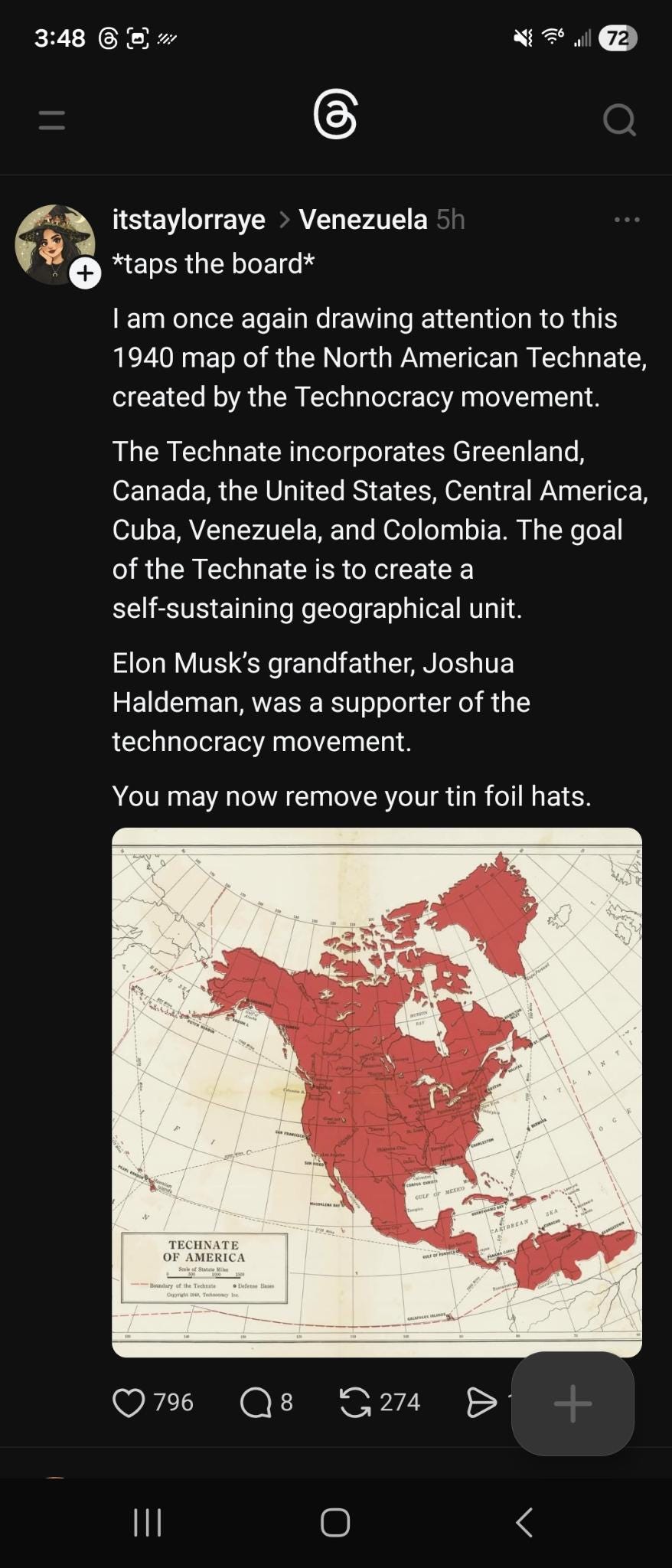
This is where modern confusion often begins. Some supporters of technocracy did exist well into the mid-20th century, including Joshua Haldeman, the grandfather of Elon Musk. That fact is real, documented, and frequently cited online. But genealogy is not ideology. Haldeman died in 1974. There is no evidence of institutional continuity between Technocracy Inc. and modern Silicon Valley, nor of any operational plan inherited across generations. Treating family history as political destiny is tempting, but historically unsound.
Still, the ideas technocracy grappled with never entirely disappeared. They mutated and evolved. In the late 20th and early 21st centuries, a different strain of anti-democratic thinking emerged among some technologists and intellectuals, one that overlaps in mood if not origin. Figures like Peter Thiel have openly expressed skepticism about democracy’s ability to function in complex, modern societies. Thiel has funded projects aimed at bypassing democratic constraints altogether, including seasteading, private governance experiments, and political candidates hostile to pluralism.
Closely related to this worldview is the intellectual current often referred to as the Dark Enlightenment, a loosely connected set of ideas arguing that democracy is a historical mistake, equality is corrosive, and hierarchy is both inevitable and desirable. While not technocracy in the 1930s sense, the Dark Enlightenment shares a core assumption with it: that popular sovereignty is a problem to be solved, not a value to be preserved.
This is where retroactive pattern-making becomes dangerous. When modern events, like U.S. intervention in Venezuela, the rise of billionaire political influence, or growing hostility toward democratic norms, appear to echo old maps or forgotten movements, it is easy to conclude that we are witnessing the return of a secret plan. But similarity does not equal continuity. Ideas recur because societies face recurring problems: complexity, inequality, instability, and fear. Different generations reach for similar answers, often without knowing or caring about their predecessors.
The Technate map “fits” modern anxieties not because it explains them, but because it taps into a recurring temptation. It helps focus the fear of intellectuals and those who are “permanently online” by stoking fears over the ruling elite’s beliefs, such as the belief that democracy is inefficient, that experts know better. That order can be imposed from above without consequence. That temptation existed in the 1930s. It exists today. What connects them is not conspiracy, but context.
The real danger is not that a 1930s technocratic blueprint is being dusted off and implemented. The danger is that the underlying impulses, such as the desire to trade democratic friction for technocratic control, keep reappearing whenever democracy feels messy or slow. When people feel overwhelmed, they look for systems that promise certainty. When elites feel constrained, they look for ways around accountability.
Seeing the Technate everywhere may be historically wrong. Ignoring the authoritarian drift in modern technocratic thinking would be equally mistaken. The task is not to hunt for hidden maps and then begin claiming that modern oligarchs, technocrats, and leaders are trying to finish something they started long ago, but to recognize the ideas that keep resurfacing in new forms and understand the danger of those ideas and how they work to oppress the many to the benefit of the few. History doesn’t repeat itself through secret societies. It repeats because human beings keep making the same trade-offs between efficiency and freedom. It repeats because humans keep convincing themselves that this version will be different. You can apply the same logic to Democracy, Republicanism, and the ideals of the Enlightenment, such as belief in humanity, tolerance, reason, and pluralism.
There will always be those who push for change, those who defend the status quo, and those who long for a return to the “good old days.” The task is not to pick one of these camps reflexively, but to understand the ideas they draw from and the assumptions they carry. Studying concepts from the past, like the “Technate,” is not about uncovering a hidden master plan, but about recognizing recurring ways people respond to fear, instability, and rapid change. History offers frameworks, not blueprints.
Yes, the push toward a more technologically mediated future is real. Yes, the current administration’s posture toward territory and resources echoes earlier visions of hemispheric control. Yes, extreme inequality driven by tech billionaires and concentrated power is one of the defining problems of our time. These are not imagined threats, and they deserve serious scrutiny. But framing them as the resurrection of a 94-year-old technocratic conspiracy does more harm than good.
When complex, structural problems are reduced to secret plots, they become easier to dismiss and harder to solve. Skeptics stop listening, supporters retreat into fatalism, and the public conversation collapses into accusation rather than analysis. What should be a debate about power, democracy, accountability, and the role of technology instead becomes a search for hidden maps and coded intentions.

The real danger is not that the Technate is quietly being imposed. It is that many of the impulses behind it, distrust of democracy, faith in elite expertise, and the desire to trade participation for efficiency, are resurfacing openly, without the need for conspiracy to give them force. Understanding that distinction matters. If we want to challenge authoritarian drift and technocratic overreach, we have to confront them as they actually exist, not as myths we’ve retroactively assembled.
History helps us see patterns. It does not absolve us of responsibility. The future is not being dictated by a forgotten diagram from the 1930s. It is being shaped, right now, by the choices we make about power, accountability, and whether we still believe democracy is worth the inconvenience.